
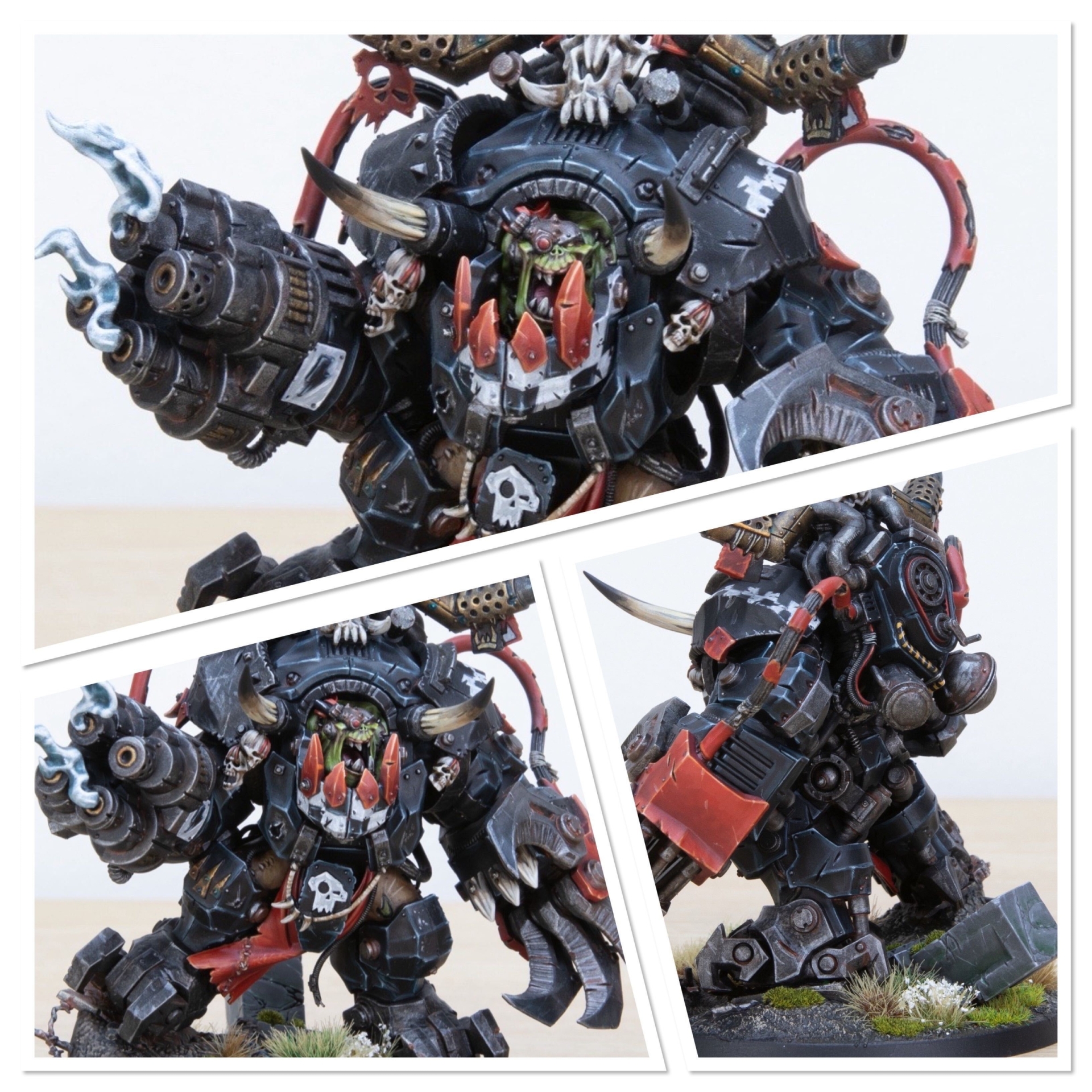
So, I finally did it. I dragged myself — kicking and screaming — to the hobby table and forced myself out of the comfy bubble I’d built for myself of small, single figures. Bliss, honestly. But then I saw the most majestic Ork miniature: Ghazghkull_Uruk_Thraka.
I knew I needed to paint him. So I bought the kit… and promptly placed it in the “I’ll do it next” pile. Six months and several smaller projects later, I decided it was time. I opted to paint Ghaz alone — not Makari — as I’m not a gamer and was only really interested in the painting side of the miniature.
The kit went together beautifully. The only sub‑assemblies I kept separate were his head and the metal jaw plate. Everything else I decided to paint fully assembled, even attached to the base. For some reason, though, I really struggled to get him to stay on that base. He was glued, pinned, strapped and practically bolted to his tactical rock, yet he kept falling off. I managed to prime him black… and then he fell off again. My frustration got the better of me, and he ended up in a drawer for another four months.
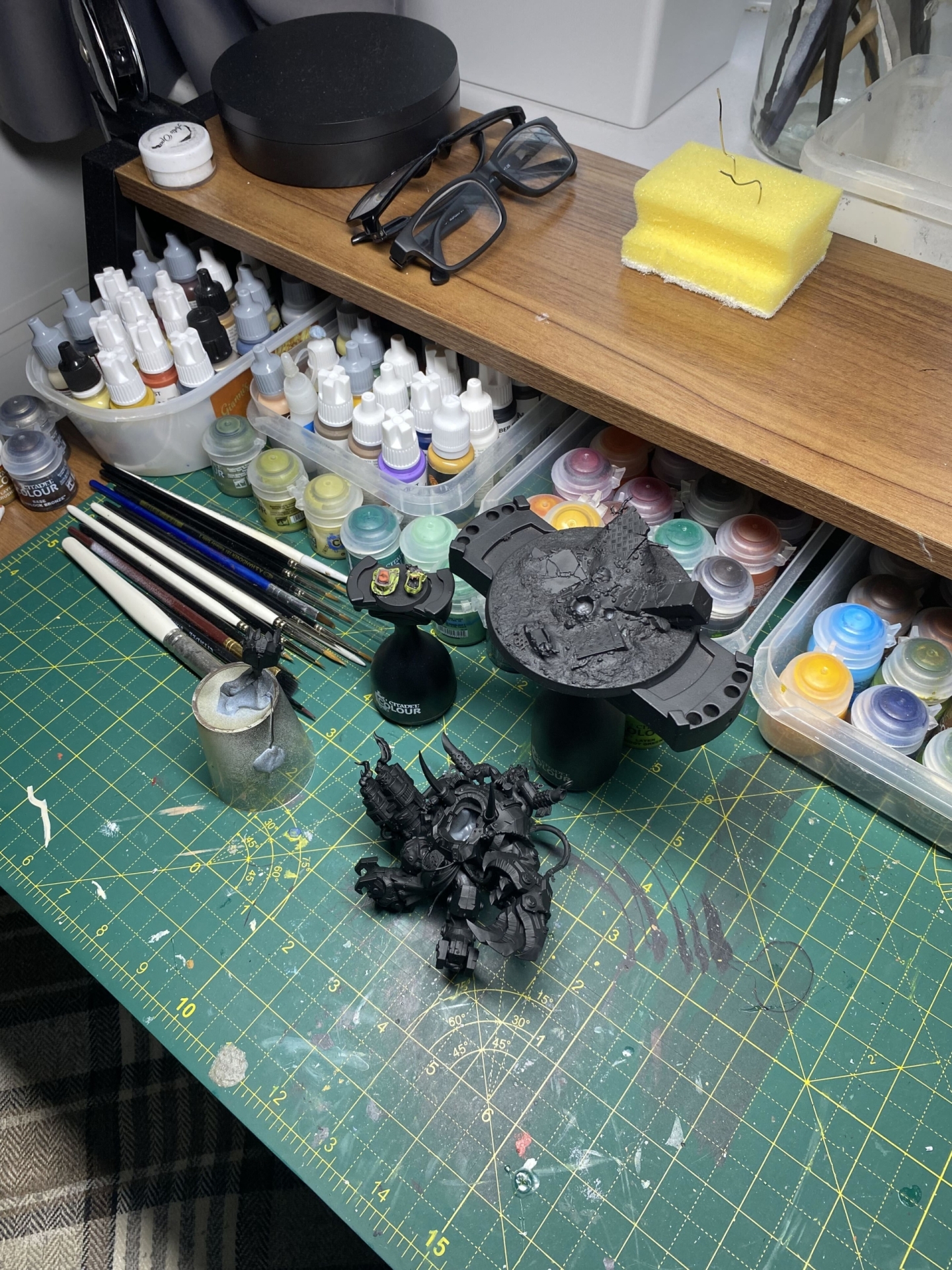
At that point, I’d basically given up — defeated by the simple act of attaching a model to a base. But several models later, with Armageddon on the horizon and a build‑up of Orky goodness all around, I felt the urge to try again. I set myself a goal: finish Ghaz before Eleventh_Edition arrived, so I had about two months or so.
Fuelled by that deadline, I dug the parts out of the drawer and set about reattaching him. This time, I added a blob of Green Stuff to each foot and used a much longer pin. As the parts came together, the Green Stuff bonded them nicely. I textured it a little and left it to cure for two days.
When I was brave enough, I tested the connection the only way I knew how: I tipped him upside down and gave him a good jiggle. With Ghaz finally secured, I could get on with the best bit — the painting.
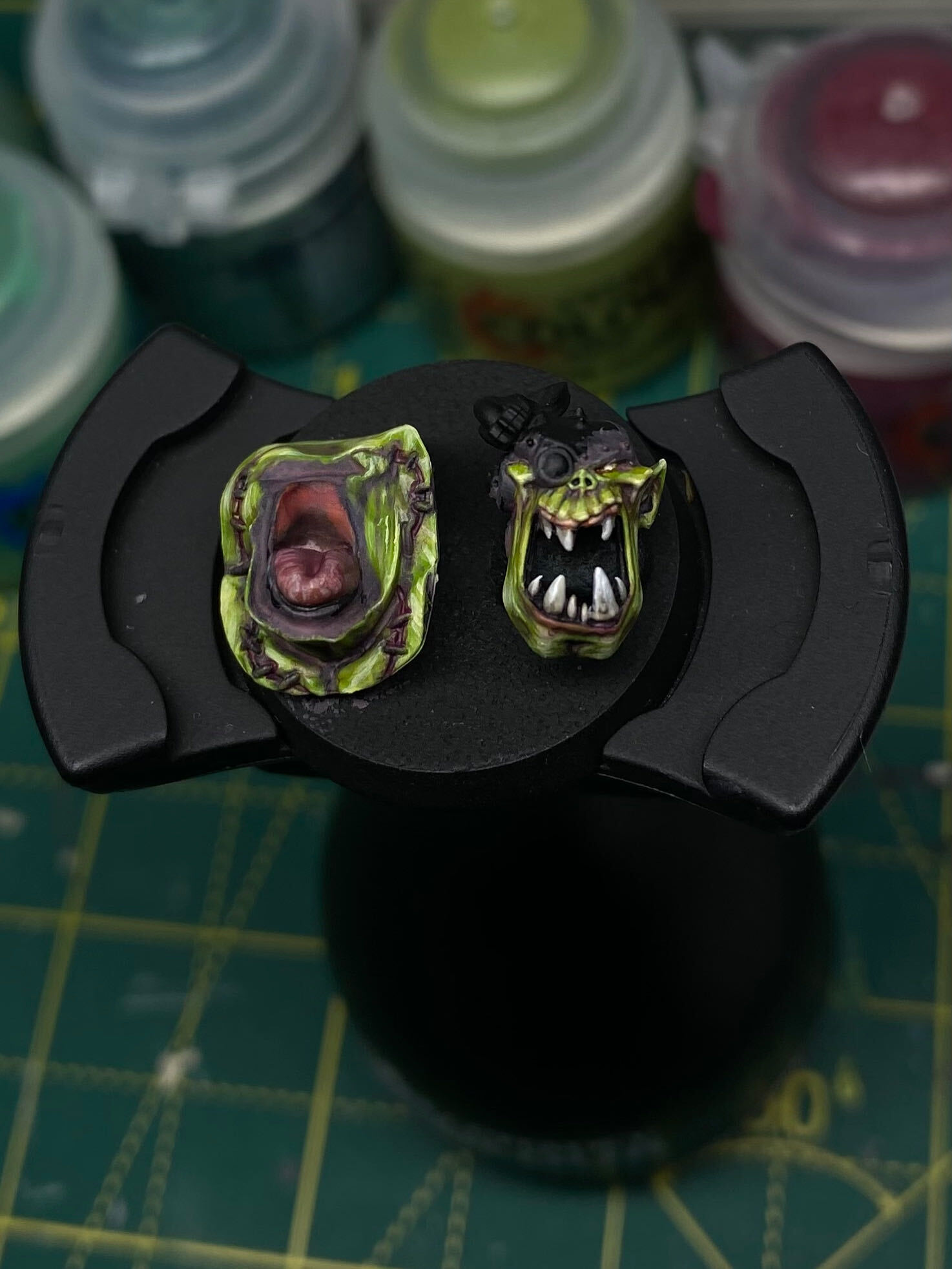
His face, being separate, was easy to work on. I mixed my Ork flesh tones as I went, despite lacking some paints I’d normally use. Still, I managed a good green tone, and as there isn’t much Ork skin on the model (well, there is more — I just didn’t paint it), I was happy enough with the result.
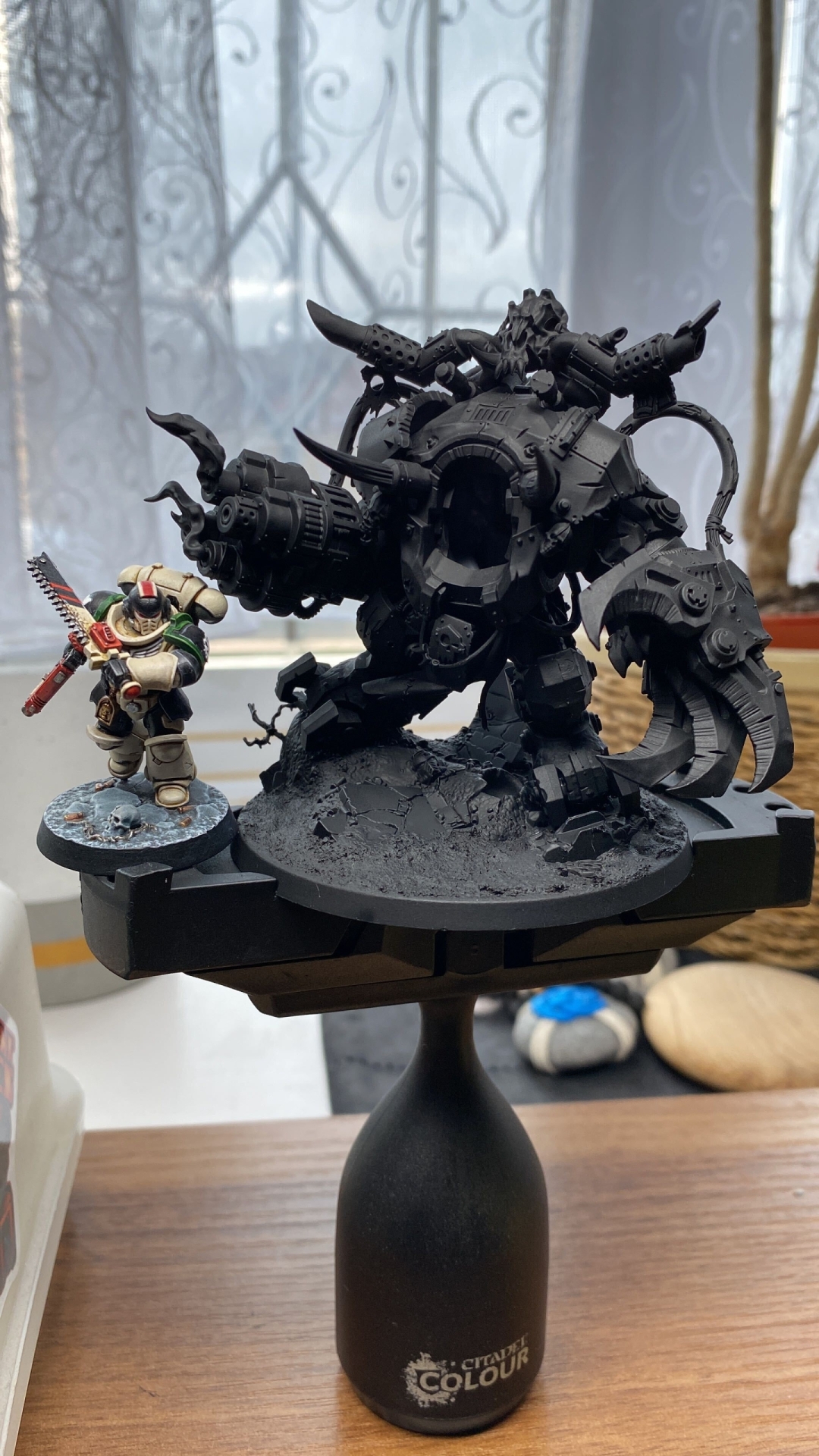
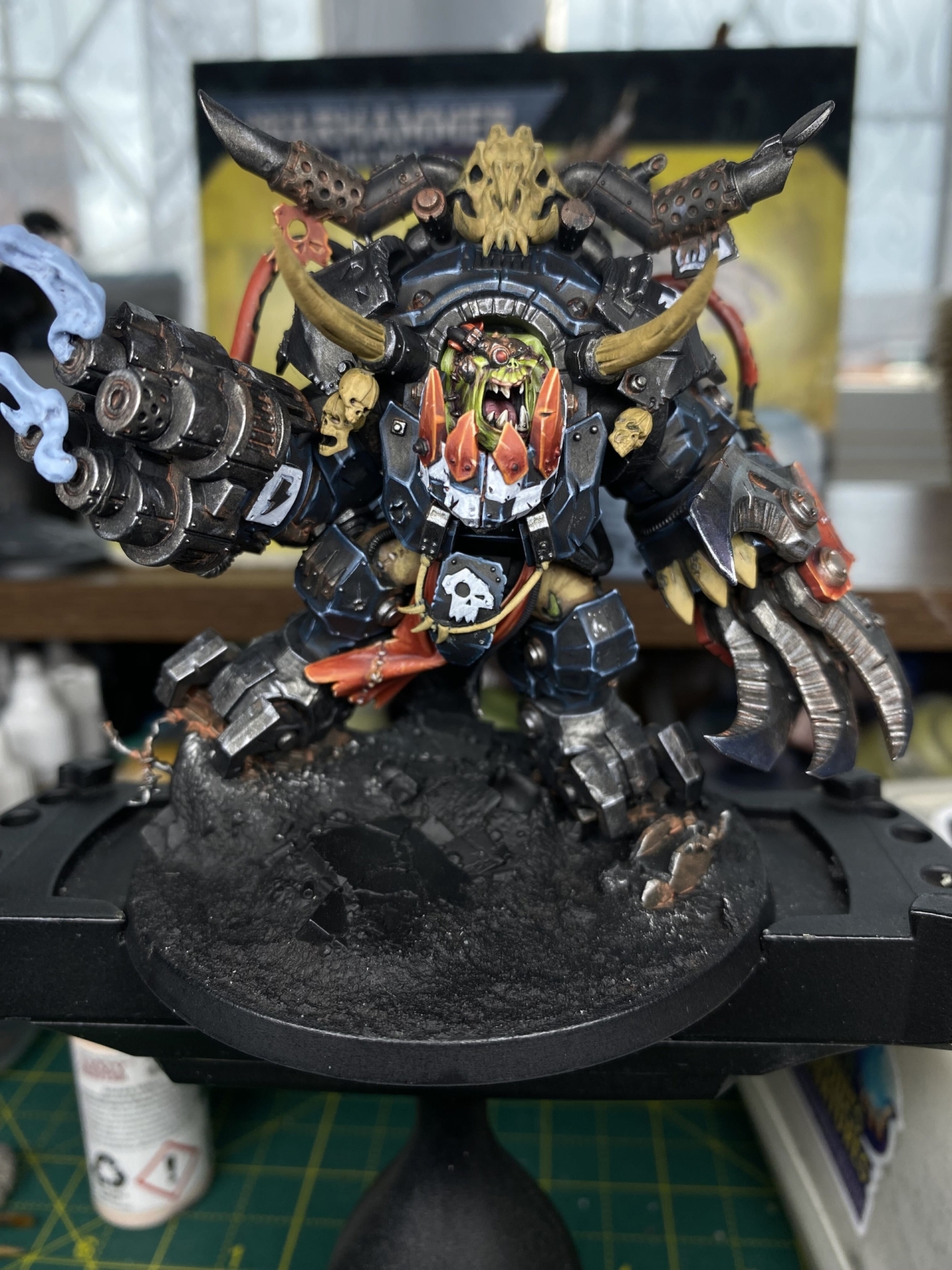
It wasn’t until I moved on to the main body that it hit me: this model is big. Dreadnought big. Even Space Marines look small next to him. There’s a huge amount of mechanical detail — cables, armour plates, pistons, vents — so I looked for a quick way to block in the bulk before tackling the details. I dry‑brushed the lot with Leadbelcher. That single step pushed the project forward massively. Seeing more paint than primer is always a morale boost.
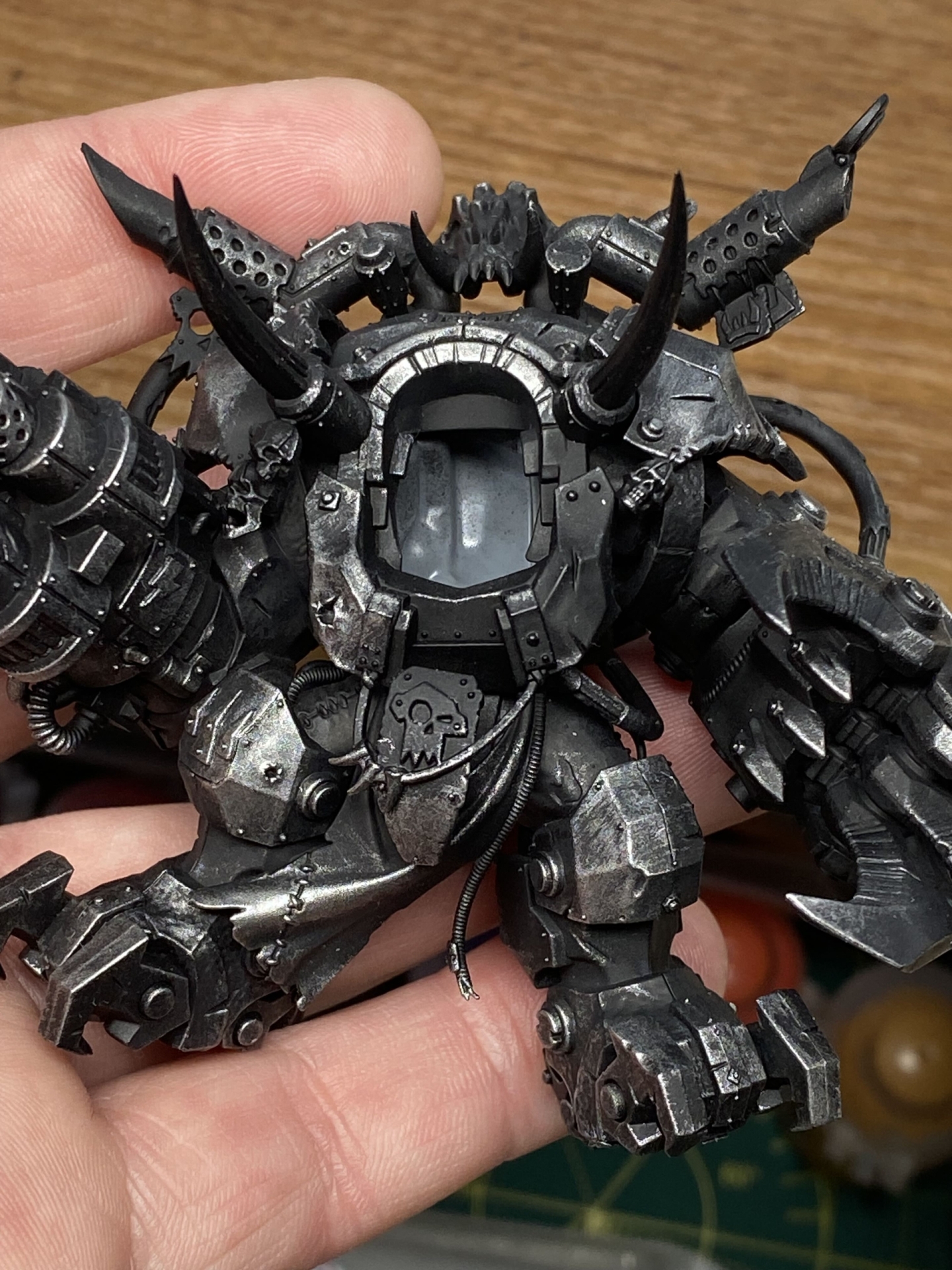
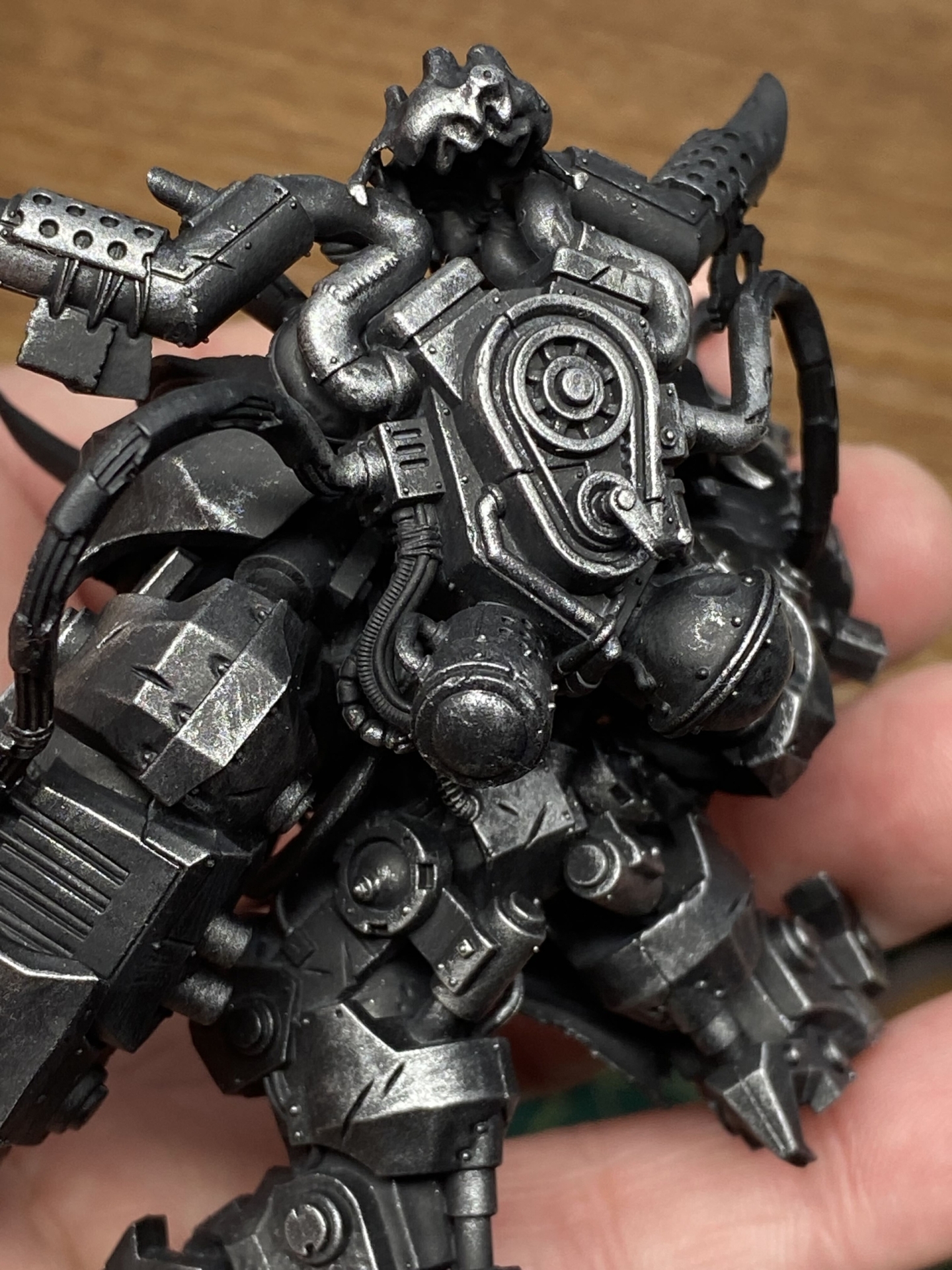
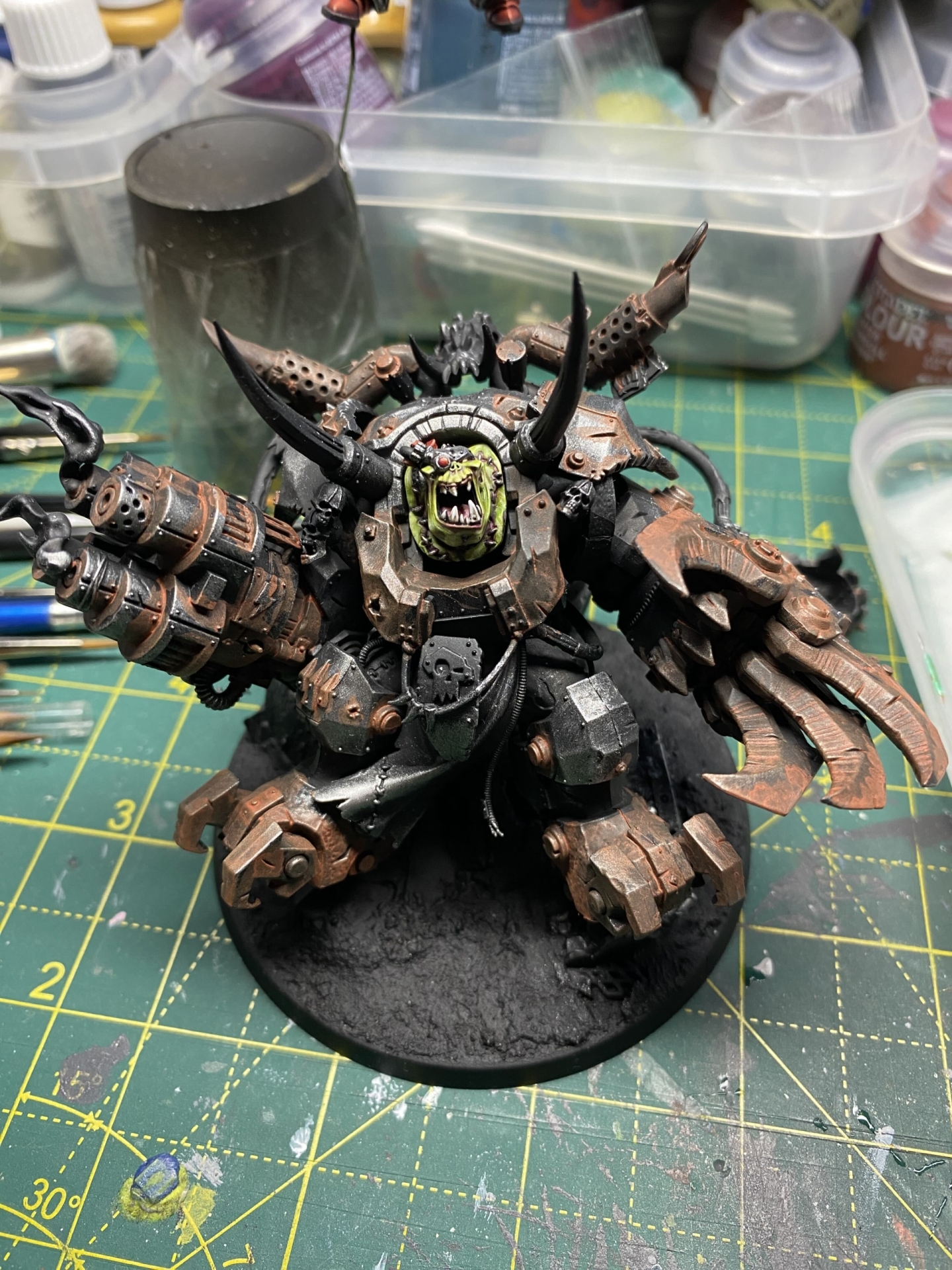
After dry‑brushing, I decided to rust everything. Normally I’d save this for later, but I was having too much fun — Peep Show on in the background, hobby zen achieved. I mixed a thick wash of AK Medium Rust and absolutely drenched the model. It was a proper trust the process moment. A couple of hours later, he looked suitably rusty. I then dry‑brushed the metal again with Leadbelcher to catch the edges and add highlights.
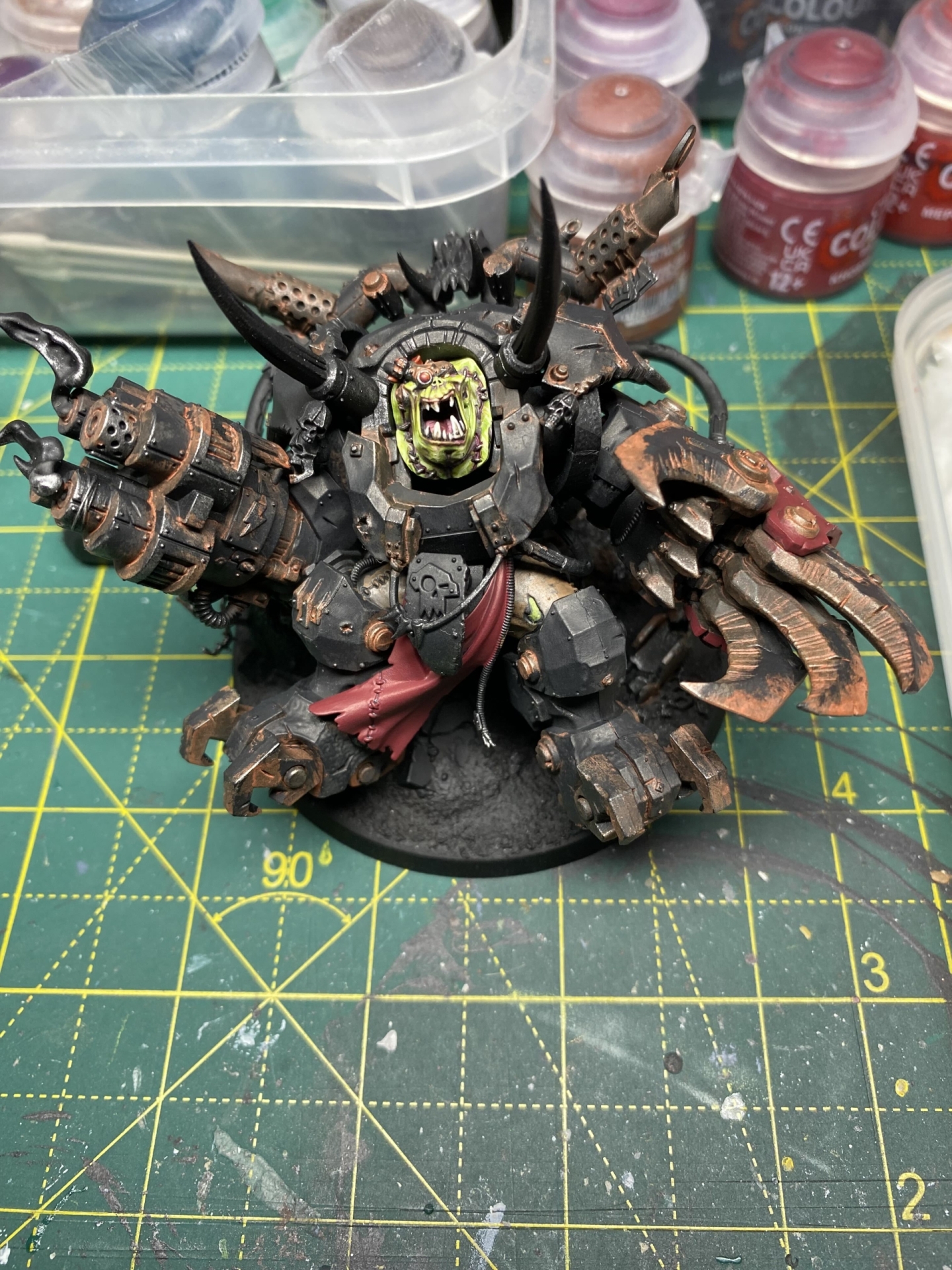
Next came the armour — mostly black, with chequers and a few red panels. I painted a fresh coat of AK Black over the plates, keeping some of the rusty staining where it looked good. Then came the edge highlights: Incubi Darkness, Thunderhawk Blue, and Blue Horror. Lovely. I actually enjoyed painting the chequers; freehand isn’t my strong point, but sketching the squares lightly with the brush first helped a lot.
The armour was a bit of a time sink — there are so many panels — but an afternoon of zen edge‑highlighting got it done. The red armour panels, like the power klaw and the crude plates on his jaw, were next. Simple highlights pushing into the orange spectrum, finishing with Ice Yellow (a must‑have paint, truly). I glazed the shadows of the power klaw’s red panel with purple because… well, why not?
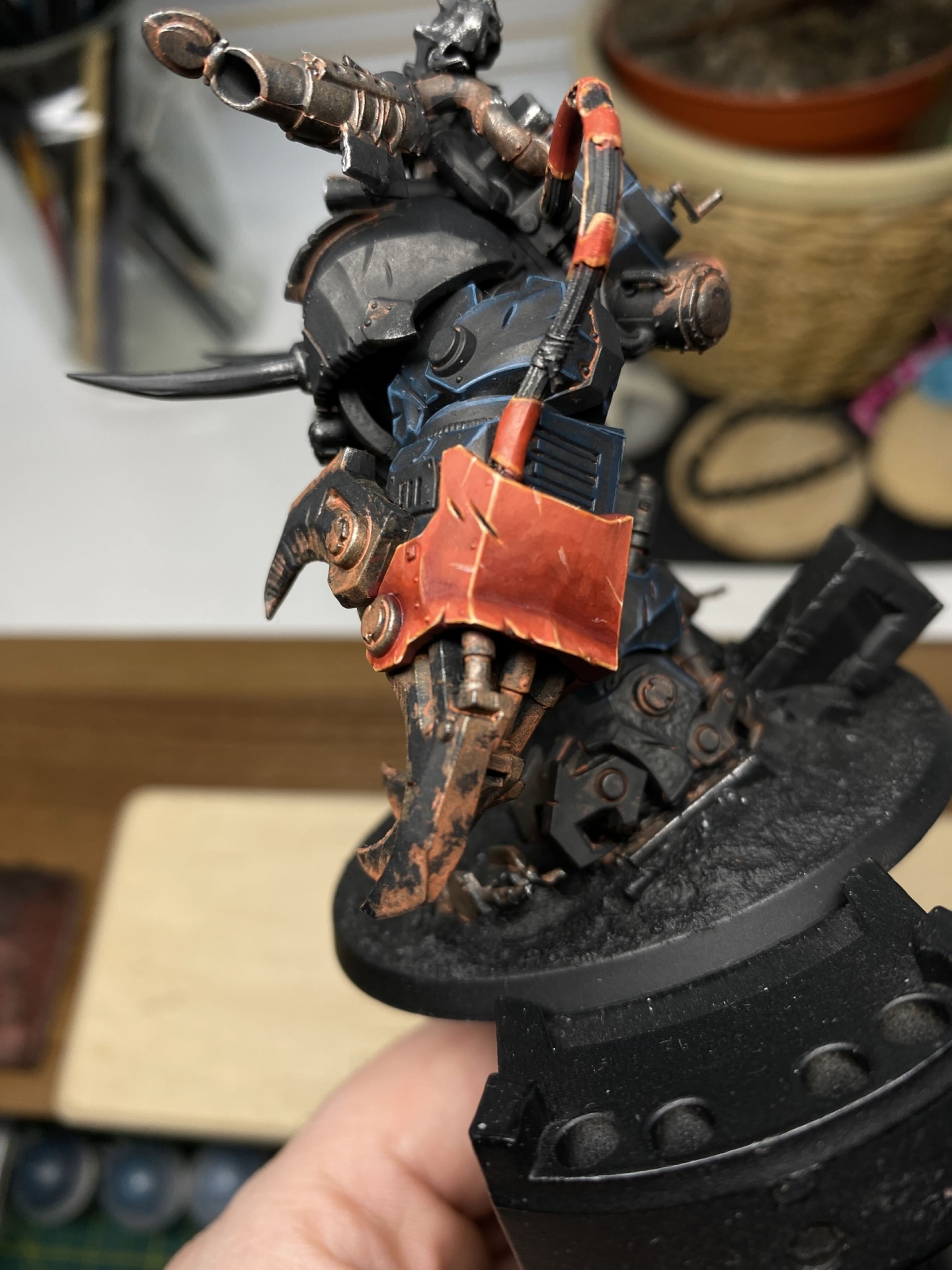
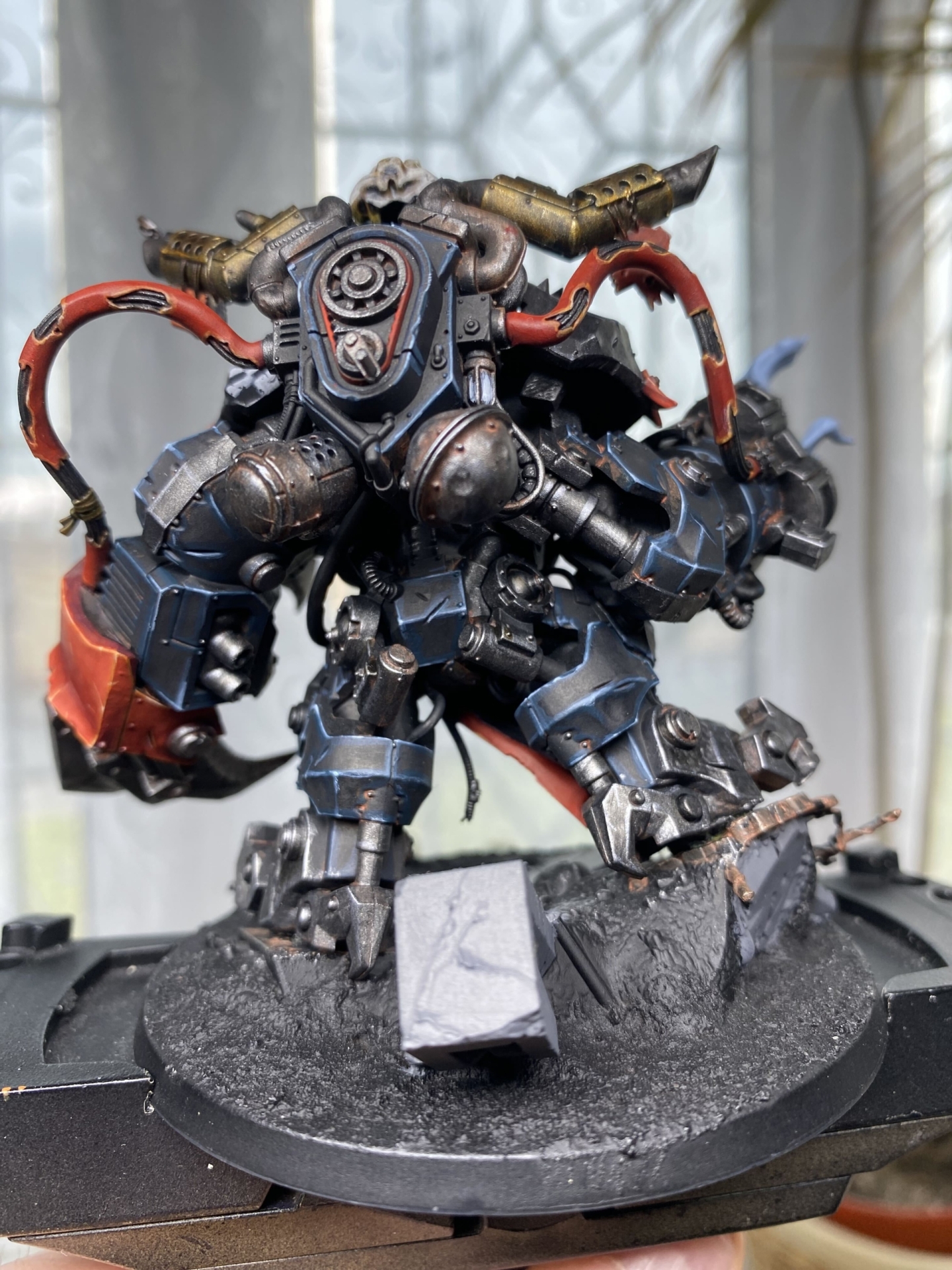
Speaking of glazing, I spent quite a while glazing the large claws with purple and blue. I’m not entirely sure why — I just felt they needed something more than plain silver. I hoped it would give them a worn, characterful look. Mostly, though, it was an excuse to glaze more. I love glazing.
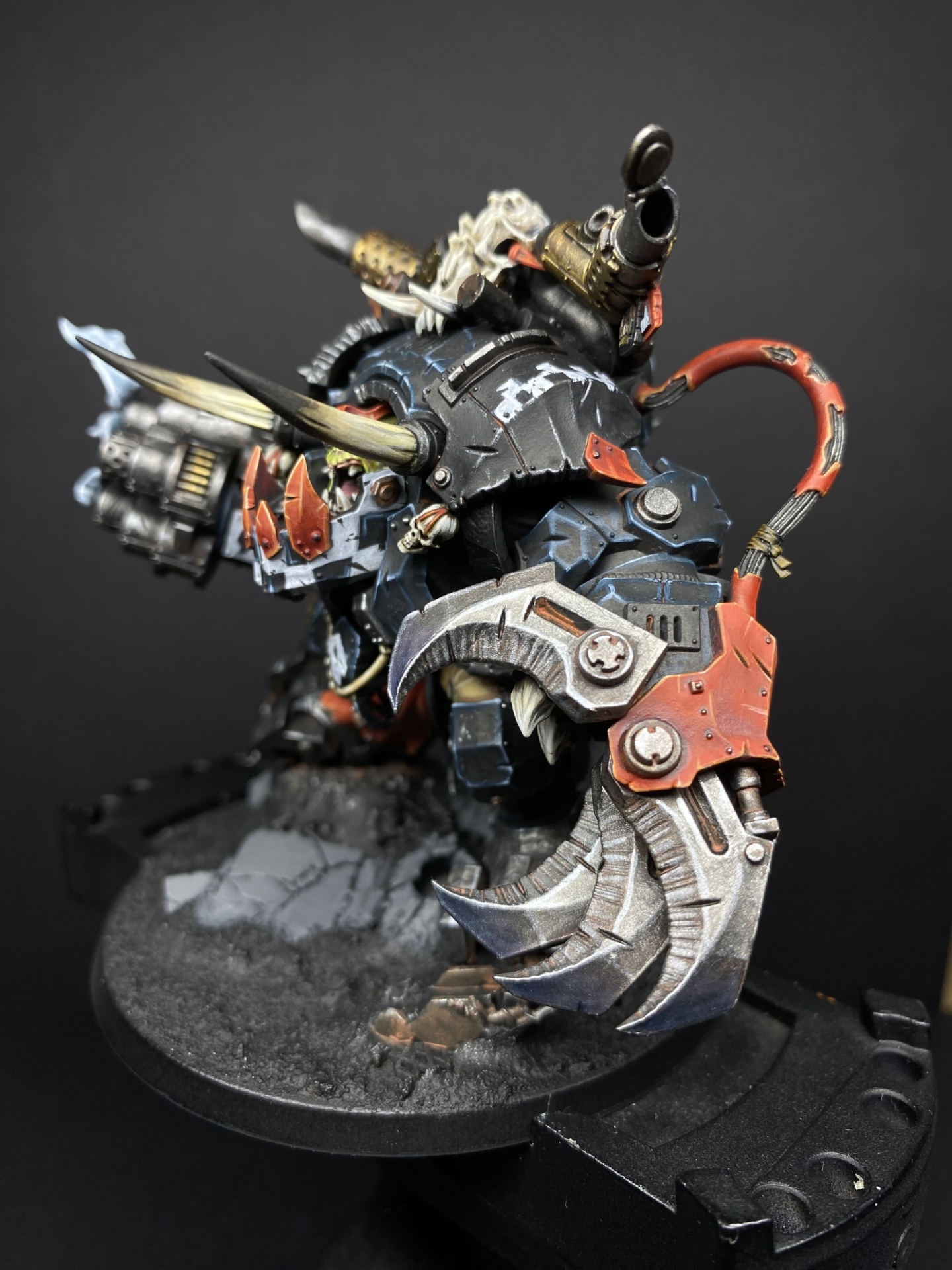
With Ghaz coming together, my motivation grew. After securing the armoured jaw, I tackled the bones, skulls, and tusks. I tried a mix of techniques — dry‑brushing, glazing, even using vibrant colours under the bone tones. The results varied, but I was happy enough. Then came the cables, stitches, and tiny details we all forget until the end. I attempted adding stripes to the cables, but let’s just say I need more practice — painting around a ninety‑degree bend threw me off. It’s fine; no one will notice.
Feeling chuffed with myself for finishing the main model, I turned to the base. Thankfully, the sculpted terrain meant I didn’t have to invent anything. I just needed to match the quality of the paintwork. I’m not usually a fan of basing — I struggle to like my own bases — but I wanted to put effort in this time. I enjoyed glazing the stonework with pale greens to suggest moss. A few tufts from the box later, and I was genuinely happy with the result.
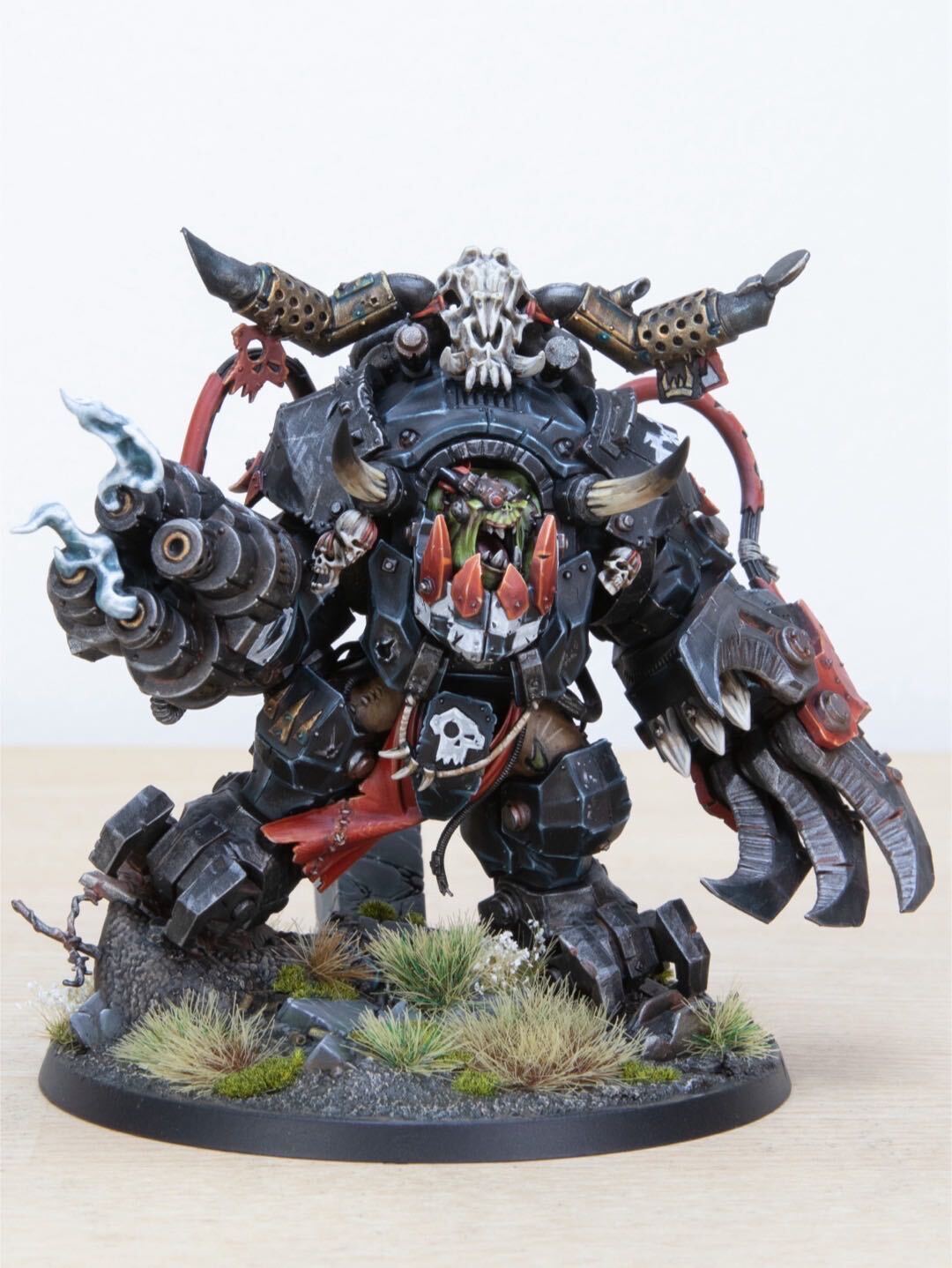
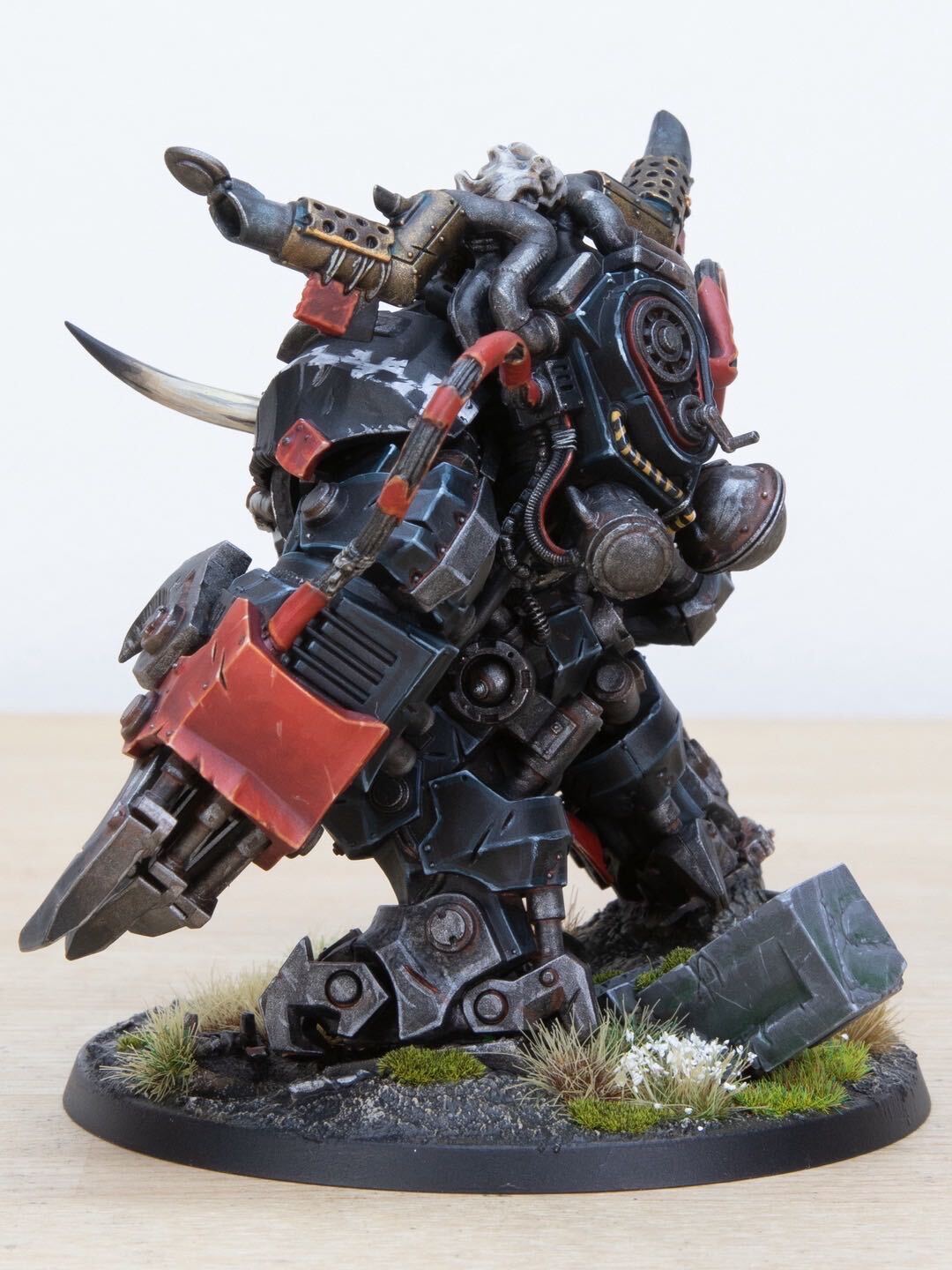
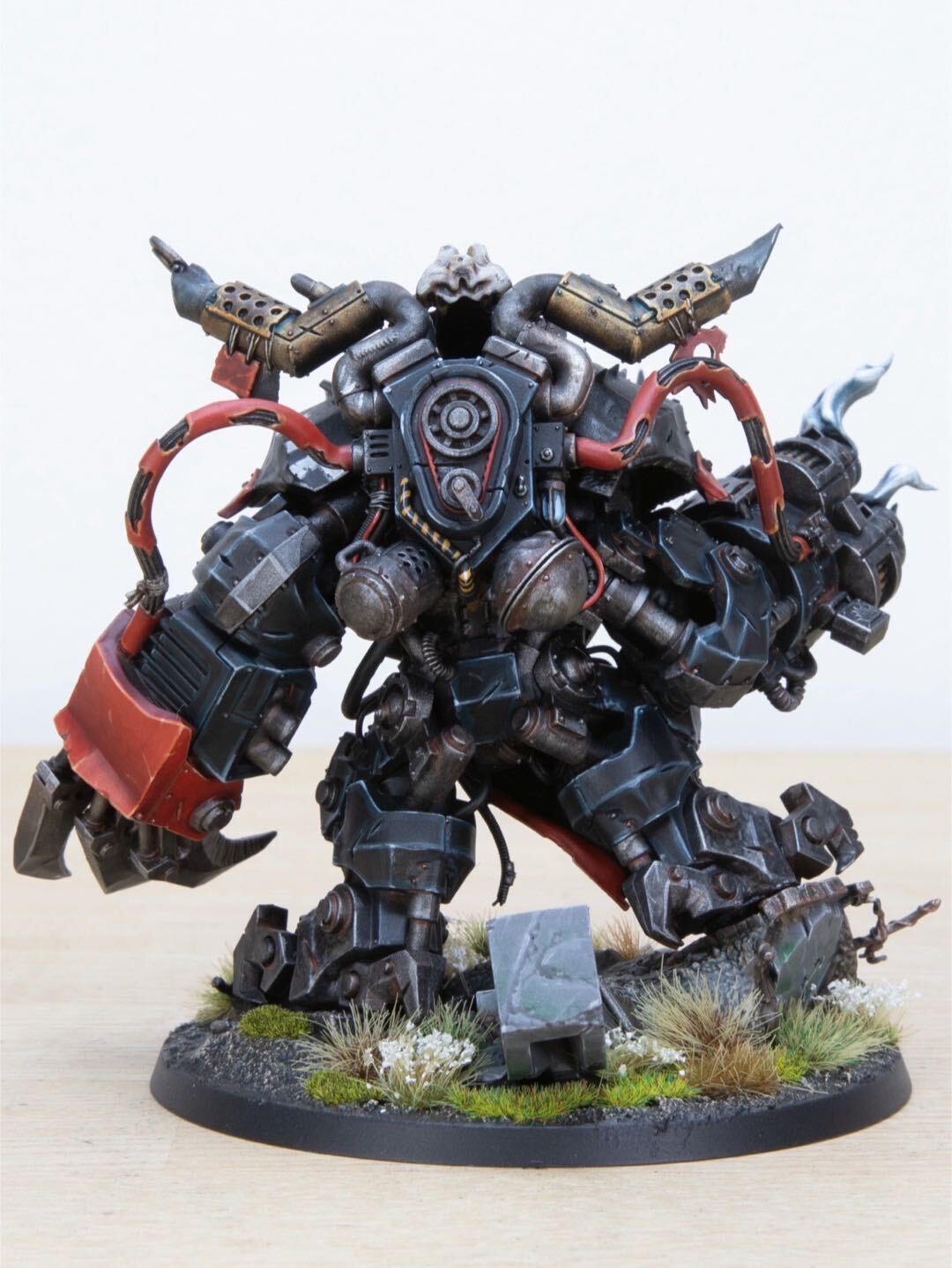
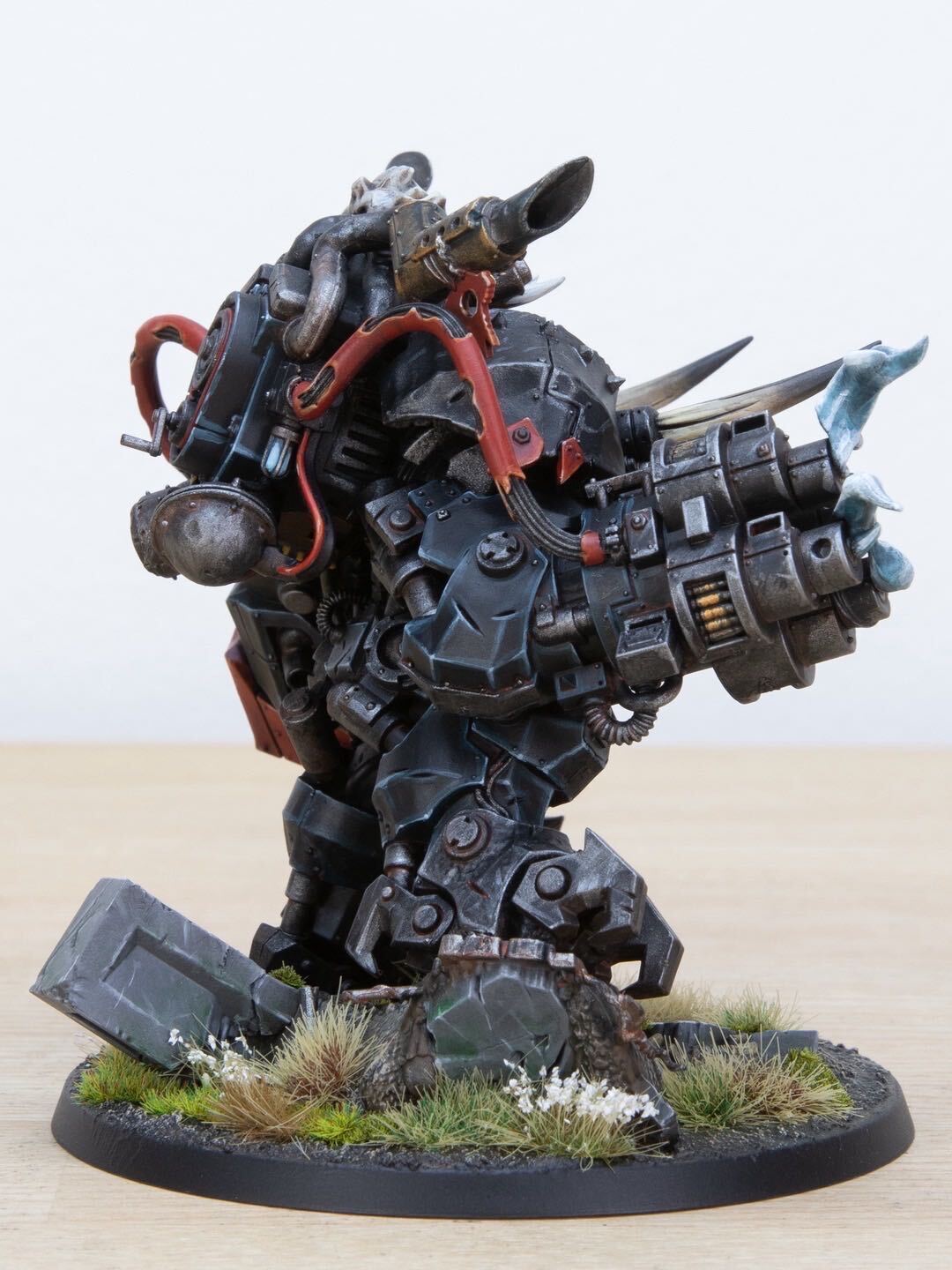
Overall, despite the slow start, this project was a brilliant learning experience. The initial struggle with the base nearly shelved it for good, but sticking with it gave me another centrepiece for the shelf, some memorable highs and lows, and a real sense of achievement. Setting small, achievable goals within the larger project helped me see progress more clearly.
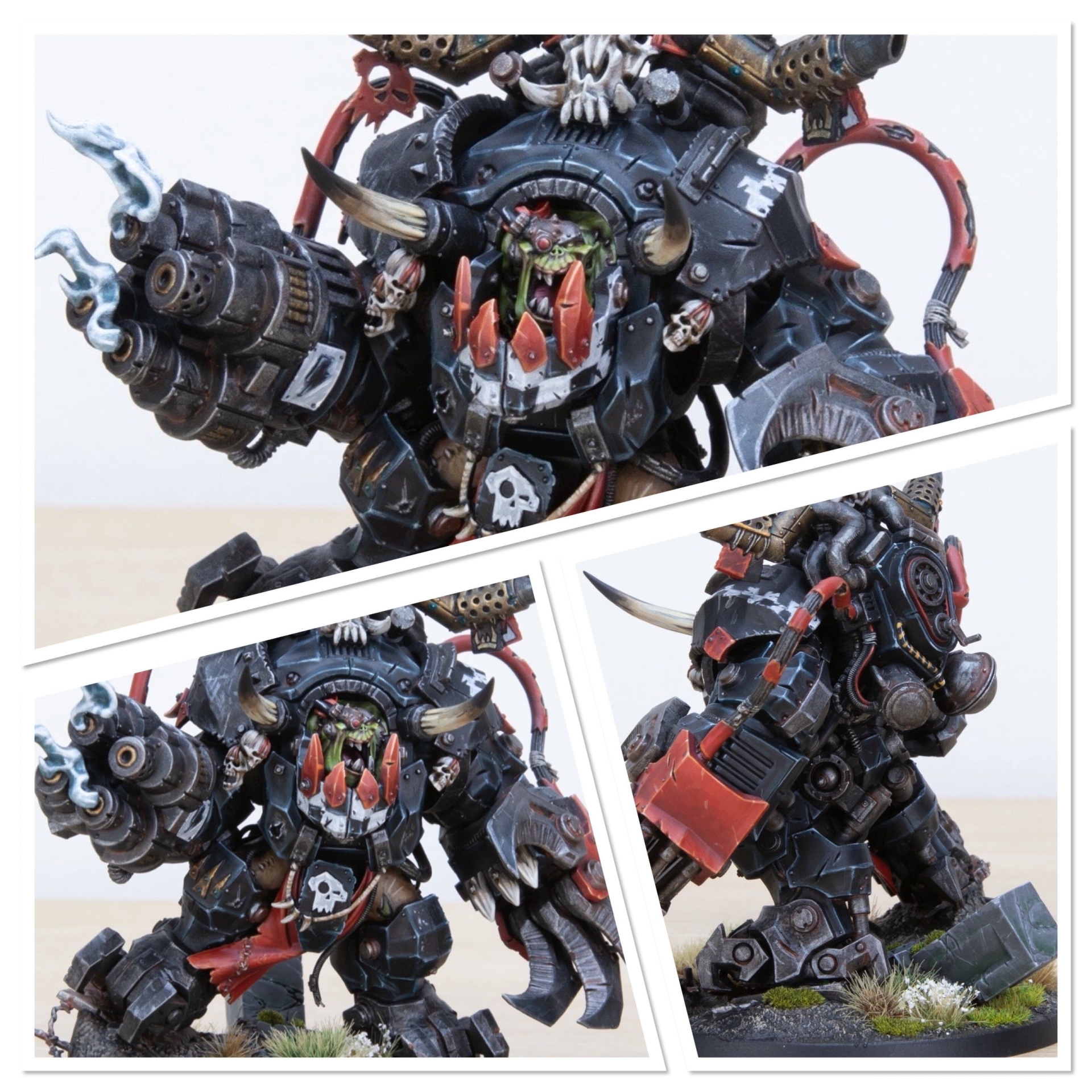
I’m glad I gave Ghaz a chance. I’m glad the community helped guide me. And I’m glad I got to show him off at the 2026 Iron Skull Painting Competition. After all this, I’m only more eager to paint more Orks!